St Levan Park Flood Relief Scheme
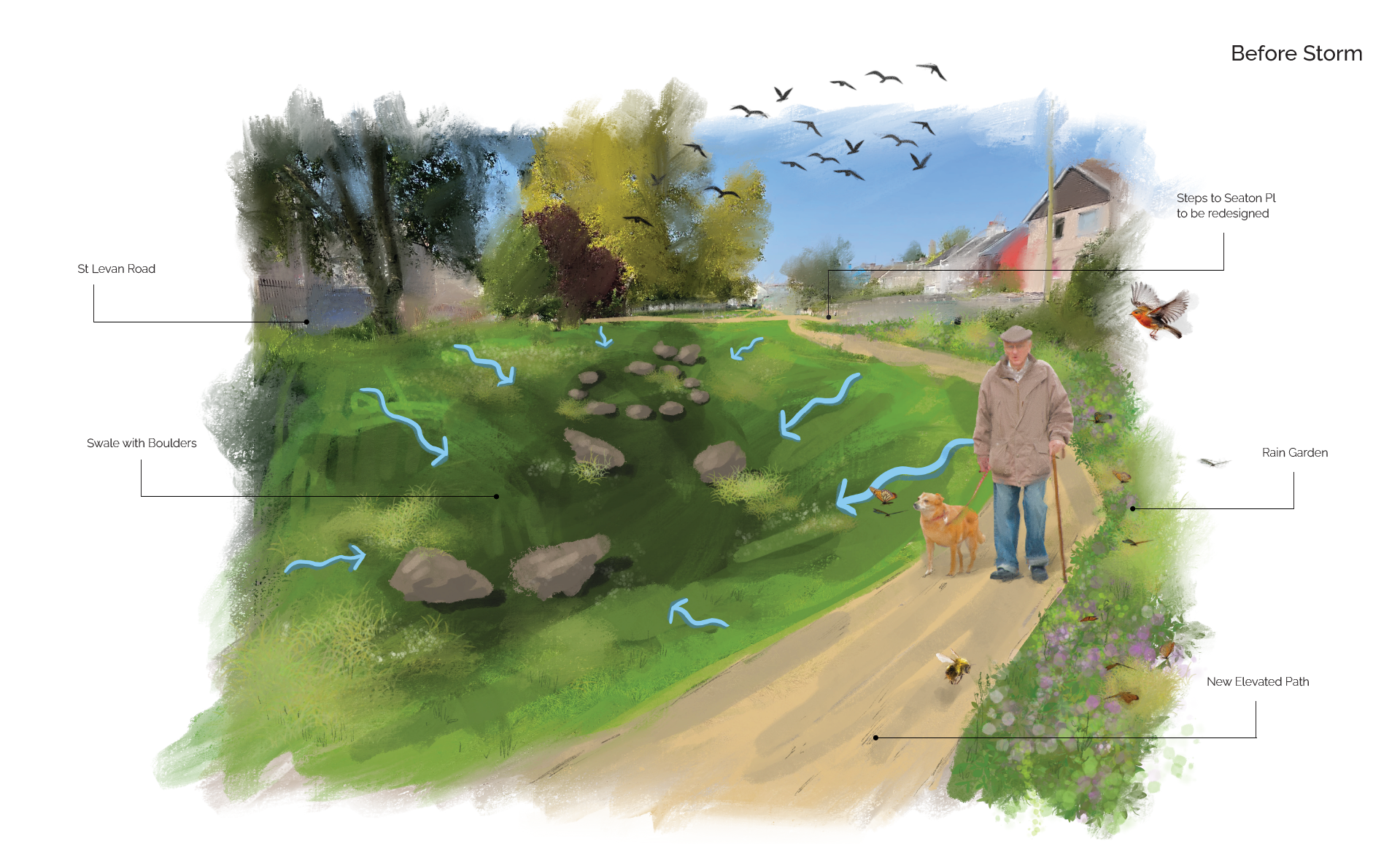
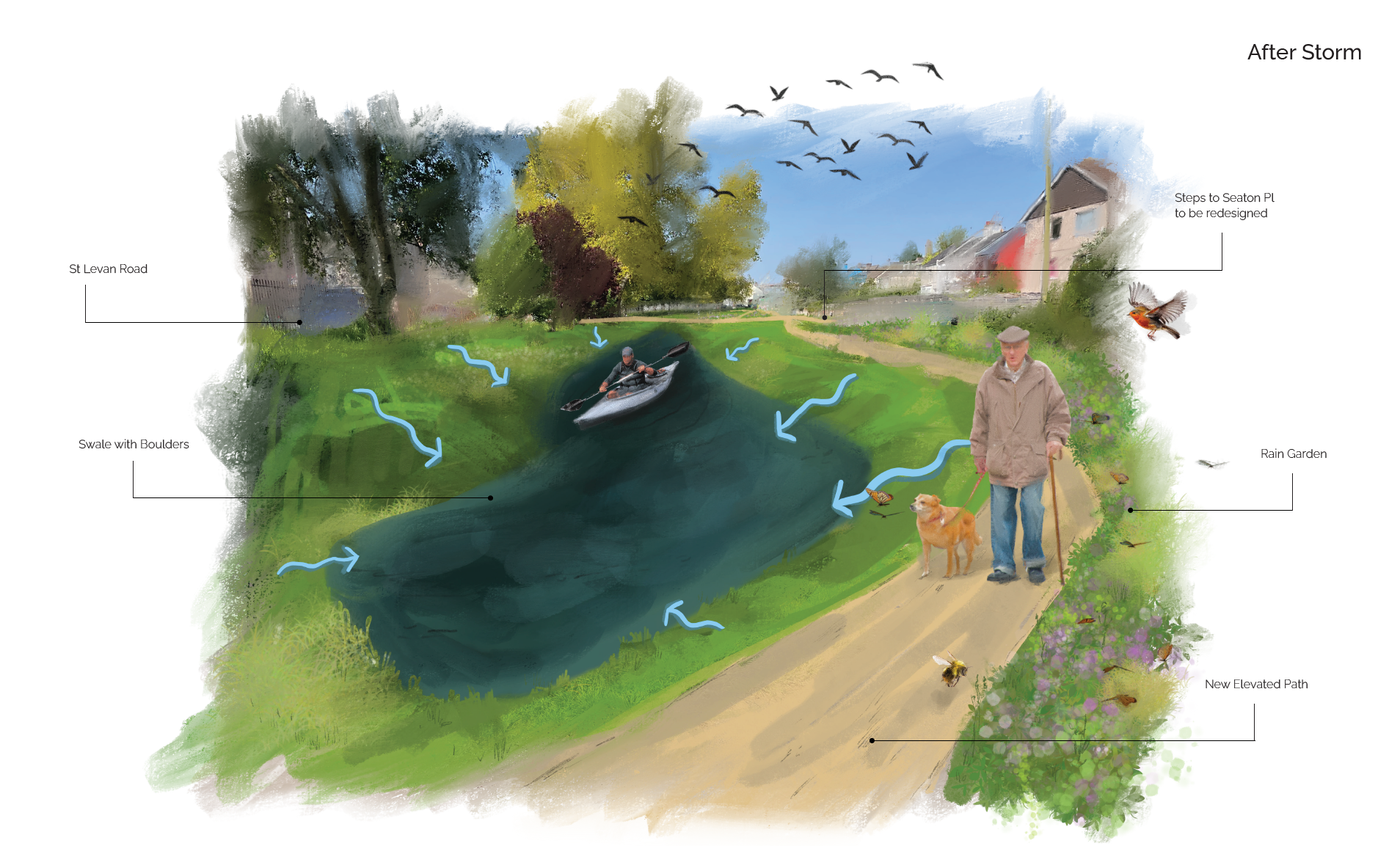
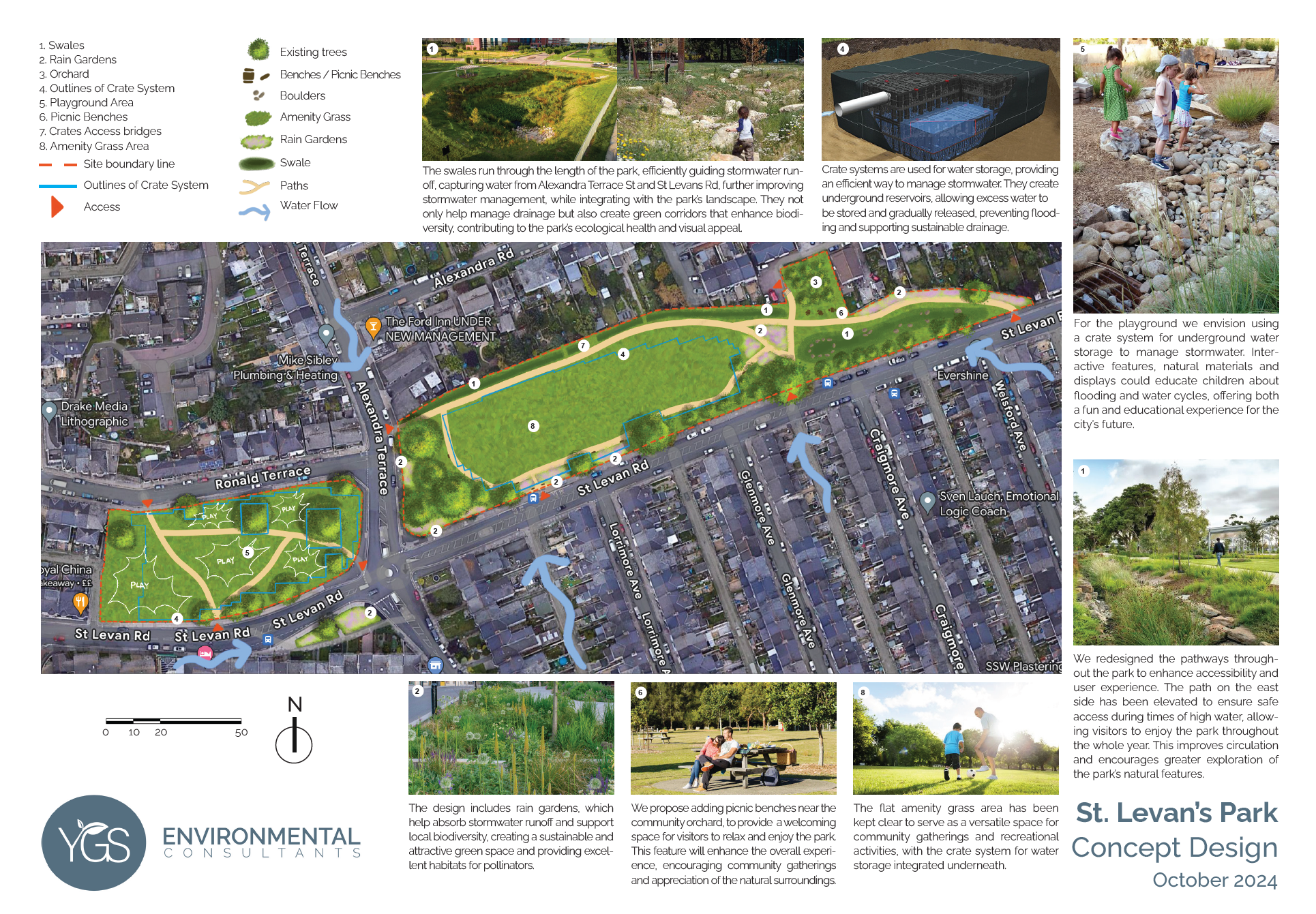
In partnership with Plymouth City Council, Environment Agency and South West Water Services Ltd, our team worked on the St Levan Park Flood Relief Scheme to transform this local green space into a resilient landscape that manages storm-water while enhancing the park’s amenity and ecological value.
Challenge & Opportunity
Located at the base of steep roads that channel heavy rainfall, St Levan Park regularly floods, with depths over 1 m in parts and road closures and sewer backups impacting the surrounding residential streets.
The brief was both technical and aspirational: to reduce flood risk to homes and businesses, safely store excess water in the park during peak rainfall events, and at the same time improve the park’s paths, entrances, seating and biodiversity. Plymouth City Council
Design Approach
We adopted a multi-layered strategy:
Re-modelling the park’s landform and surface water flow paths so that during heavy rainfall the park becomes a temporary water-storage zone, reducing the burden on downstream drainage.
Enhancing connectivity and accessibility: improved entrances, pathways and seating make the park more inviting and usable for the community.
Elevating the ecological value: new wildflower meadows, flowering shrubs, a wildlife pond, bird boxes and bug hotels respond to community feedback on biodiversity improvements. Plymouth City Council
Community consultation and resilience-building: working with the council’s “Building Resilience in Communities” (BRIC) team to engage residents, promote flood awareness and help establish a local Flood Action Group. Plymouth City Council
Outcome & Impact
The scheme delivers measurable benefits: mitigating flood risk to nearby roads and homes, improving the park’s usability year-round, and creating richer habitat for wildlife. With water safely stored and managed, the neighbourhood gains a greener, more resilient space that also supports wellbeing and nature connection.
For the park users, the improvements mean better access, new features, and a stronger sense of place. For the ecosystem, the introduction of native plants, ponds and nesting opportunities strengthens biodiversity.